British Airways Emergency Flight BA286: Full Story & Safety
British Airways Flight BA286 faced not one, but two high-stakes emergencies that tested the airline’s preparedness, crew training, and safety protocols. On May 27, 2025, a passenger medical emergency occurred over the North Atlantic, while a few months earlier, the same flight experienced a critical technical issue requiring an emergency landing.
These incidents showcase the complexities of modern aviation, where human skill, advanced technology, and meticulous planning intersect to protect lives. In this article, we explore both events, the airline’s response, and the lessons learned, highlighting why safety remains the top priority in air travel.
British Airways Emergency Flight BA286 faced medical and technical crises. Discover how crew training and safety protocols ensured passengers’ safe arrival..
Flight BA286 Medical Emergency Over the Atlantic
The Incident Overview
The first incident involved a serious medical emergency mid-flight. Flight BA286, an Airbus A380 flying from San Francisco to London Heathrow, was carrying hundreds of passengers when the crisis unfolded. The cabin crew quickly assessed the situation, identifying a passenger whose condition required immediate attention. Recognizing the severity, the pilots declared a general emergency by activating Squawk 7700, a universal code that alerts air traffic control that the flight requires priority handling.
Crew Response and Passenger Care
The crew immediately began administering medical aid. Oxygen masks were prepared, first aid kits opened, and Automated External Defibrillators (AEDs) brought into use. Every action followed the airline’s detailed emergency protocols. Simultaneously, pilots coordinated with ground-based medical specialists through British Airways’ telemedicine service, which allows real-time guidance in medical emergencies. This ensured that every decision, from stabilizing the passenger to determining whether to continue the flight or divert, was informed by expert advice.
Passenger care was as important as medical intervention. Cabin crew maintained calm among passengers, offering reassurance and providing clear information about the situation without causing panic. Many passengers described how the crew’s professionalism helped them stay composed, even in a high-pressure environment. The flight ultimately continued safely to London Heathrow, where medical teams were ready to receive the patient upon arrival. This incident highlighted how modern aviation systems, including telemedicine, training, and coordination, combine to save lives.
Aviation Safety in Action
This incident highlights modern aviation’s safety systems:
- Redundant aircraft safety measures.
- Crew training for high-stress scenarios.
- Integration of telemedicine for real-time medical guidance.
Technical Emergency and Emergency Landing
Engine Irregularities and Cabin Pressure Loss
A separate incident occurred on a different leg of the same flight route, demonstrating the airline’s preparedness for mechanical emergencies. While en route from London Heathrow to New York City, the aircraft experienced engine irregularities alongside a sudden loss of cabin pressure. Alarms blared, oxygen masks deployed, and the crew immediately initiated emergency protocols. Passengers were instructed to secure themselves, while pilots evaluated the safest course of action.
Emergency Procedures and Decision Making
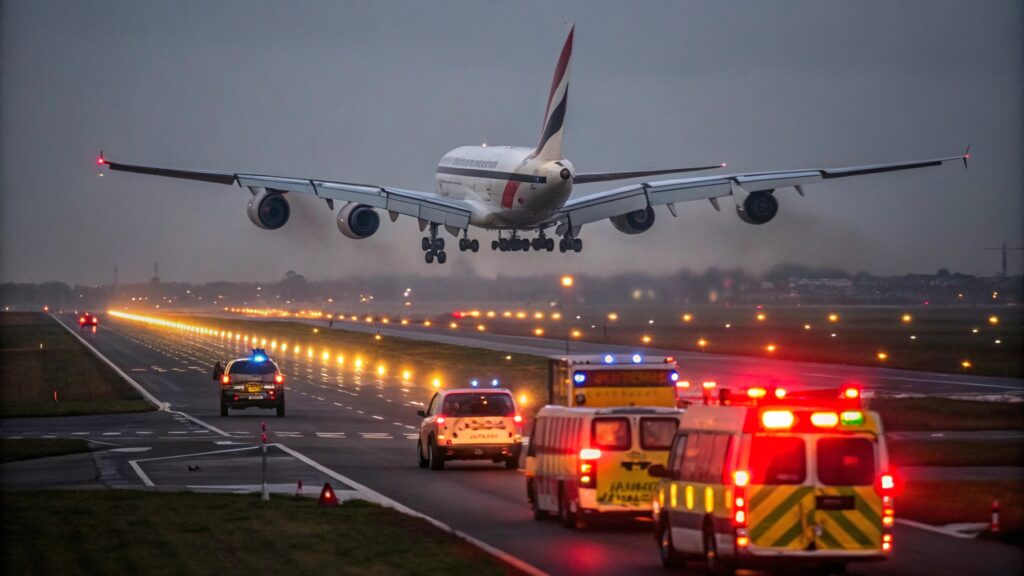
The decision was made to return to Heathrow for an emergency landing. ATC cleared the airspace, prioritizing the aircraft’s descent, and coordinated with emergency services on the ground. Emergency vehicles lined the runway as the Airbus A380 approached, ready to respond in seconds if needed. The cabin crew ensured passengers remained calm, assisting with safety instructions and emotional reassurance. Despite the tense circumstances, all passengers and crew were unharmed, underscoring the effectiveness of training and emergency planning.
Passenger Experiences During the Incident
Passengers witnessed firsthand the coordination required between the cockpit, cabin crew, and ground teams. Families comforted children, while more experienced flyers provided support and guidance to others. This combination of professional preparedness and human empathy ensured that fear did not turn into panic. The event also reinforced the airline’s culture of safety, where precautionary decisions take precedence over schedule adherence or operational convenience.
Crew Training and Preparedness
Simulation Exercises for High-Stress Scenarios
British Airways’ handling of both incidents demonstrates the depth of its training programs. Crew members undergo rigorous simulation exercises, covering scenarios such as medical emergencies, technical failures, cabin decompression, and fire incidents. These simulations are designed to replicate real-world conditions, ensuring that responses become instinctive under pressure.
Teamwork and Communication
Regular drills reinforce teamwork, communication, and situational awareness. Cabin crew members are trained not just in technical skills, but in psychological support, helping passengers remain calm and cooperative during emergencies. Pilots, meanwhile, are trained in decision-making under uncertainty, balancing risk, safety, and operational constraints. The BA286 events are clear examples of how this training directly translates into passenger safety.
Telemedicine Integration
During medical emergencies, flight crews can consult with specialists on the ground, receiving guidance on treatment, stabilization, and decision-making. This system ensures that even complex medical issues are handled effectively, combining onboard skill with expert oversight. BA’s investment in telemedicine sets it apart from many competitors, particularly low-cost carriers.
Operational Coordination and Ground Support
Air Traffic Control and Emergency Services
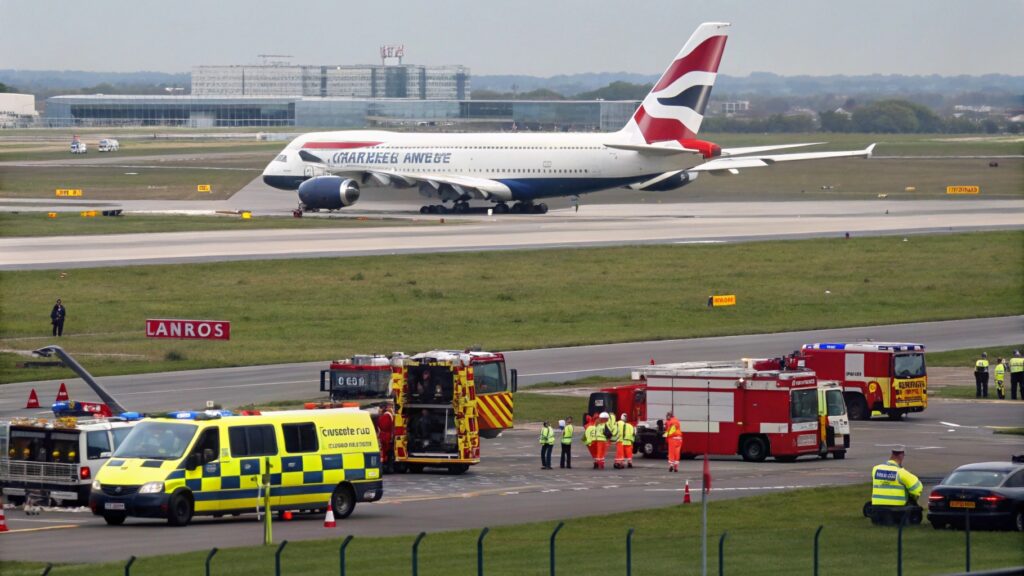
Once Squawk 7700 is activated, air traffic control works to prioritize the aircraft’s path, clear nearby traffic, and facilitate a safe landing. At the airport, emergency services are mobilized, including ambulances, fire crews, and medical teams. Every aspect of this chain of coordination is pre-planned and rehearsed, ensuring no time is wasted during a real emergency.
Importance of Ground Readiness
For passengers, the sight of emergency vehicles lining the runway can be alarming, but it reflects careful preparation. This proactive approach ensures that help is seconds away if needed, minimizing risk and maximizing the chances of a safe outcome. The BA286 incidents illustrate the effectiveness of this integrated safety culture, where both human and technical resources converge seamlessly.
Passenger Experience During Emergencies
Passengers aboard BA286 displayed remarkable composure during both incidents. While natural anxiety is expected during emergencies, the crew’s calm communication, clear instructions, and reassurance helped mitigate fear. Many passengers described small acts of kindness, shared laughter, and mutual support that arose in response to the stress of the situation.
Children were comforted by parents and crew, while seasoned travelers guided others through instructions. These social interactions demonstrate how passenger behavior, combined with professional management, contributes to overall safety. Airlines like British Airways not only train their crews but also design procedures that encourage cooperative and informed passenger behavior, which can be critical during crises.
Learning from BA286 Incidents
Continuous Improvement
Every emergency is an opportunity for learning and improvement. Following the BA286 medical and technical emergencies, investigators and airline officials reviewed each decision, action, and outcome. The aim is not to assign blame but to enhance safety standards and prevent future occurrences.
Implementation of Safety Measures
The airline implemented lessons learned across multiple areas, including:
- Enhancing medical kit availability and crew medical training.
- Improving real-time telemedicine communication protocols.
- Refining emergency landing procedures and ATC coordination.
- Strengthening passenger communication strategies.
These continuous improvements reflect the airline’s commitment to safety and demonstrate how incidents can drive positive change across the aviation industry.
Industry Comparison: Emergency Preparedness
Full-Service Airlines
Full-service carriers like Virgin Atlantic, Lufthansa, Delta, and United provide strong training and procedural frameworks. BA’s telemedicine integration and layered emergency protocols give it an edge, ensuring better response to medical and technical emergencies during long-haul flights.
Low-Cost Carriers
Low-cost carriers such as Ryanair and easyJet focus primarily on short-haul operations and lack the same level of onboard emergency infrastructure or long-haul preparedness. This highlights the difference between airlines prioritizing passenger safety and integrated emergency systems versus operational efficiency and cost reduction.
Timeline of BA286 Incidents
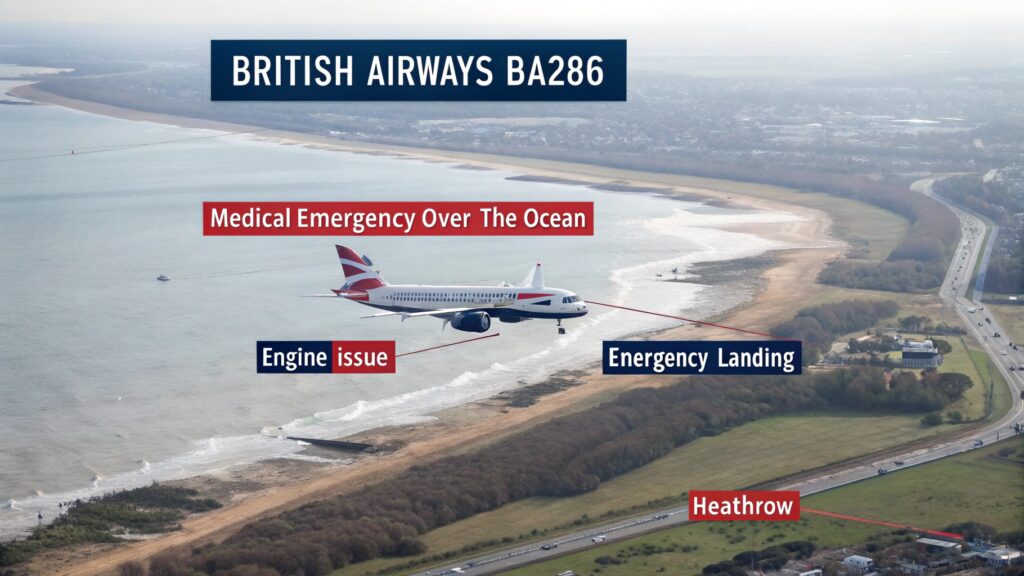
Medical Emergency (May 27, 2025)
- Departure: San Francisco to London Heathrow.
- Passenger falls seriously ill mid-flight.
- Crew activates Squawk 7700 and provides onboard medical aid.
- Telemedicine consulted; flight continues safely to Heathrow.
Technical Emergency (Sep 8, 2025)
- Departure: London Heathrow to New York City.
- Engine irregularities detected; cabin pressure alarms triggered.
- Decision to return to Heathrow for emergency landing.
- Ground emergency services coordinated; passengers and crew safe.
Lessons Learned for Passengers and Airlines
- Crew Training is Vital: Prepared, skilled staff are the first line of defense.
- Communication Reduces Panic: Clear instructions and updates keep passengers calm.
- Technology Enhances Safety: Telemedicine and modern aircraft systems improve outcomes.
- Operational Coordination Saves Lives: ATC, airport emergency services, and airline operations must act in concert.
- Continuous Learning is Crucial: Each incident informs improvements in training, protocols, and passenger care.
FAQs
Q1: What caused the medical emergency on BA286?
A passenger experienced a serious health issue mid-flight, requiring immediate medical attention and telemedicine consultation.
Q2: Why was Squawk 7700 activated?
This is a universal emergency code signaling ATC that the aircraft requires priority handling for safety reasons.
Q3: What happened during the technical emergency landing?
Engine irregularities and cabin pressure loss prompted a precautionary return to Heathrow, where emergency services were ready.
Q4: How does British Airways compare to other airlines in emergencies?
BA integrates telemedicine, rigorous crew training, and seamless ground coordination, often surpassing competitors in long-haul safety management.
Q5: Are passengers entitled to compensation in emergencies?
Medical and technical emergencies are generally classified as extraordinary circumstances. While care is provided, financial compensation is usually not required.
Conclusion
The dual emergencies of British Airways Flight BA286 demonstrate the airline’s commitment to safety, preparedness, and passenger care. Whether addressing medical crises over the Atlantic or managing technical emergencies requiring emergency landings, BA relies on a combination of skilled personnel, advanced technology, and operational coordination to ensure positive outcomes. These incidents reaffirm the airline’s position as a leader in long-haul aviation safety and highlight why passengers can trust British Airways for secure, reliable travel.