



Happiness is something everyone desires, yet its meaning often remains elusive. Is it simply pleasure, joy, or contentment? Modern research and philosophy reveal that happiness is far more complex, encompassing emotional wellbeing, life satisfaction, personal growth, and meaningful social connections.
- Understanding Happiness
- What Happiness Really Means
- Happiness vs Life Satisfaction
- Psychological and Subjective Wellbeing
- The Role of Emotions
- The Science of Happiness
- The Happiness Pie
- Neuroscience Behind Happiness
- Positive Psychology and Happiness
- Genetics vs Environment vs Choice
- Factors That Influence Happiness
- Relationships and Social Connections
- Work and Career Satisfaction
- Culture and Values
- Age and Happiness
- Health and Lifestyle
- Misconceptions About Happiness
- Happiness Equals Pleasure
- Money Can Buy Happiness
- Happiness is Fixed
- Happiness Means Absence of Negative Emotions
- Practical Strategies to Cultivate Happiness
- Mindfulness and Meditation
- Strengthening Relationships
- Purpose and Goal Setting
- Gratitude and Journaling
- Physical Activity
- Cognitive Techniques
- Flow and Engagement
- Resilience and Coping Skills
- Altruism and Giving
- Environmental Factors
- Frequently Asked Questions
- 1. What is the true meaning of happiness?
- 2. Can happiness be measured scientifically?
- 3. What are the types of happiness?
- 4. How can I increase happiness daily?
- 5. Is happiness the same as life satisfaction?
- Conclusion
- Related posts:
Understanding what happiness is, how it arises, and how to cultivate it can profoundly improve our mental health, relationships, and overall quality of life.
Learn what-is-happiness, its impact on emotions, life satisfaction, and ways to boost well-being for a happier, more fulfilling life..
Understanding Happiness
What Happiness Really Means
Happiness is not just a fleeting emotional state. Psychologists distinguish between hedonic happiness, the momentary pleasure derived from external circumstances, and eudaimonic happiness, which comes from pursuing meaning, personal growth, and purpose. While most people intuitively equate happiness with feeling good, research shows that long-term wellbeing depends on relationships, accomplishments, mindset, and lifestyle choices.
Happiness vs Life Satisfaction
Although often used interchangeably, happiness and life satisfaction are different. Happiness reflects emotional states—how cheerful, calm, or content someone feels. Life satisfaction, on the other hand, is a cognitive assessment of how well life aligns with personal goals and values. Studies show that people with high life satisfaction tend to live healthier and longer, even if their daily emotional experiences fluctuate.
Psychological and Subjective Wellbeing
Psychological Wellbeing (PWB) involves autonomy, personal growth, self-acceptance, and purpose, while Subjective Wellbeing (SWB) focuses on self-reported happiness, life satisfaction, and emotional balance. These frameworks provide a scientific basis for understanding happiness and guide strategies to improve both mental and physical health.
The Role of Emotions
Emotions like joy, love, gratitude, and awe contribute significantly to happiness. Positive emotions broaden our thinking, increase creativity, and strengthen relationships. Conversely, negative emotions, when chronic, can decrease wellbeing, though occasional stress or sadness is natural and can motivate personal growth.
The Science of Happiness
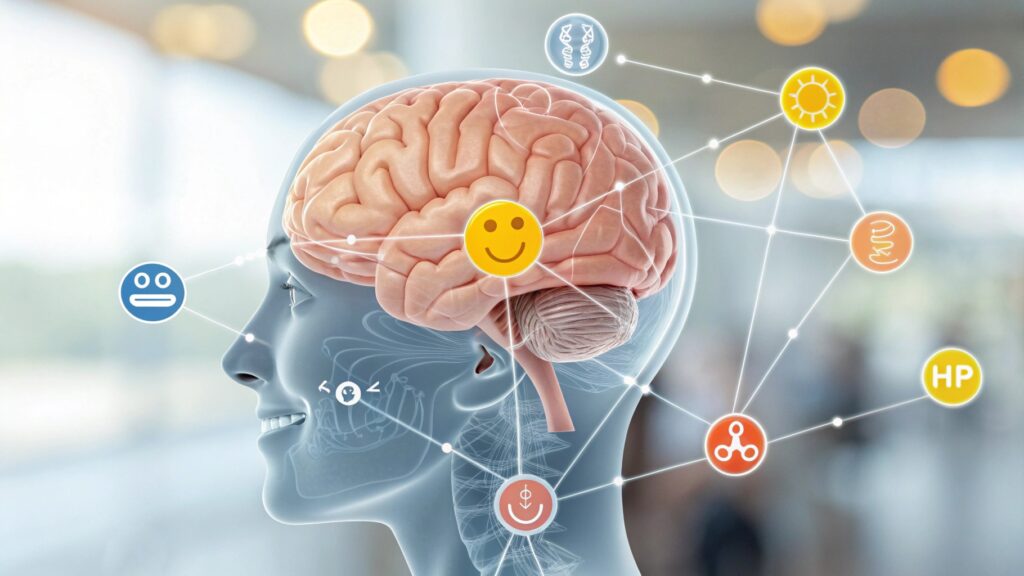
The Happiness Pie
Positive psychologists describe happiness as a “pie” divided into three slices:
- Genetics – Inherited temperament sets a baseline for happiness. Some people naturally feel more positive or resilient, while others may be prone to low moods.
- Environment – External circumstances, including relationships, work, and community, shape emotional experiences. Although some factors are uncontrollable, understanding them helps in adapting strategies.
- Actions & Habits – Daily behaviors, mindset, and life skills significantly affect wellbeing. Habits like exercise, mindfulness, gratitude, and goal setting can be adjusted to boost happiness.
While we cannot change our genetics, the third slice—the actions and habits—is entirely within our control, offering a path to sustained happiness.
Neuroscience Behind Happiness
The brain plays a central role in happiness. The prefrontal cortex regulates decision-making and emotions, the amygdala manages stress responses, and the hippocampus stores positive memories. Neurotransmitters like dopamine, serotonin, oxytocin, and endorphins are chemical messengers that drive pleasure, motivation, social bonding, and stress resilience. Activities like exercise, meditation, and deep social connection stimulate these chemicals, enhancing long-term wellbeing.
Positive Psychology and Happiness
Martin Seligman, a pioneer in positive psychology, identifies three dimensions of happiness:
- Pleasant life: Savoring everyday pleasures and sensory experiences.
- Engaged life: Using personal strengths creatively in work, hobbies, and relationships.
- Meaningful life: Contributing to something larger than oneself, creating purpose and fulfillment.
Integrating all three dimensions produces a “full life,” providing both emotional satisfaction and long-term fulfillment.
Genetics vs Environment vs Choice
While genetics and environment influence baseline happiness, research shows that intentional actions can offset negative tendencies. Positive habits, cognitive reframing, and lifestyle adjustments can enhance wellbeing more than we once thought.
Factors That Influence Happiness

Relationships and Social Connections
Strong social bonds are consistently linked to higher happiness. Positive relationships provide emotional support, reduce stress, and foster resilience. People who prioritize family, friendships, and community engagement report higher life satisfaction than those with superficial or few social connections.
Work and Career Satisfaction
Meaningful work contributes to a sense of purpose and personal achievement. Aligning career goals with personal values increases engagement and satisfaction. Conversely, unfulfilling jobs and toxic work environments can decrease wellbeing, highlighting the importance of work-life balance.
Culture and Values
Cultural context shapes our understanding of happiness. In individualistic societies, personal achievement and independence are prioritized. In collectivistic cultures, strong family ties, community engagement, and shared goals are emphasized. Recognizing these cultural influences can help tailor strategies for personal and societal happiness.
Age and Happiness
Happiness often follows a U-shaped curve across the lifespan. People tend to feel happiest in youth, less happy in midlife, and regain higher satisfaction in older age. Shifting priorities, greater emotional regulation, and appreciation of life experiences contribute to these patterns.
Health and Lifestyle
Physical health directly impacts happiness. Exercise, nutrition, sleep, and stress management improve mood and overall wellbeing. Conversely, chronic illness, poor nutrition, and sedentary habits can reduce emotional resilience and life satisfaction.
Misconceptions About Happiness
Happiness Equals Pleasure
True happiness is more than fleeting pleasure. Hedonic pleasure offers temporary joy, but eudaimonic wellbeing—finding meaning, purpose, and personal growth—produces lasting fulfillment.
Money Can Buy Happiness
Financial stability reduces stress and provides comfort, but after basic needs are met, additional wealth has minimal impact on happiness. Relationships, purpose, and experiences matter more than material possessions.
Happiness is Fixed
While genetics influence baseline happiness, scientific studies show that habits, mindset, and lifestyle choices can significantly enhance overall wellbeing. Intentionally cultivating positive actions creates sustainable happiness.
Happiness Means Absence of Negative Emotions
Happiness is not the elimination of sadness, stress, or anxiety. Experiencing a full range of emotions is normal. Resilience and coping strategies, rather than avoidance, enhance long-term happiness.
Practical Strategies to Cultivate Happiness
Mindfulness and Meditation

Mindfulness strengthens awareness of the present moment, reduces stress, and increases positive emotions. Even 10–15 minutes of daily practice can improve mental clarity, focus, and emotional balance.
Strengthening Relationships
- Express appreciation regularly
- Engage in active listening
- Spend quality time with loved ones
- Join social or community groups
Positive connections are a key predictor of long-term wellbeing.
Purpose and Goal Setting
Identifying personal values and aligning daily actions with long-term goals enhances eudaimonic happiness. Pursuing meaningful projects creates a sense of fulfillment and direction.
Gratitude and Journaling
Gratitude exercises, such as daily journaling or reflection on positive experiences, foster appreciation and contentment. These practices shift focus from negative events to positive experiences.
Physical Activity
Exercise releases endorphins, reduces stress, and improves mood. Regular activity—whether walking, yoga, or sports—contributes to both physical and emotional health.
Cognitive Techniques
- Reframing negative thoughts
- Practicing optimism
- Setting achievable challenges
These techniques improve resilience and enhance subjective wellbeing.
Advanced Insights from Positive Psychology
Flow and Engagement
Engaging deeply in activities we enjoy leads to a state called flow, where time seems to disappear, and we experience total immersion. Flow boosts satisfaction and happiness while enhancing creativity and productivity.
Resilience and Coping Skills
Happiness is not the absence of adversity. Resilient individuals bounce back from challenges, maintain perspective, and use difficulties to foster growth. Developing resilience through coping strategies strengthens long-term wellbeing.
Altruism and Giving
Helping others increases personal happiness by fostering social connection and purpose. Volunteering, mentoring, or small acts of kindness can create lasting emotional rewards.
Environmental Factors
Access to green spaces, safe communities, and supportive environments contributes to wellbeing. Urban planning, public policy, and social structures play a role in collective happiness.
Frequently Asked Questions
1. What is the true meaning of happiness?
Happiness is a combination of positive emotions, contentment, life satisfaction, and fulfillment derived from meaningful relationships and personal growth.
2. Can happiness be measured scientifically?
Yes. Tools like SWB surveys, life satisfaction scales, and psychological wellbeing assessments provide quantifiable measures of happiness and subjective wellbeing.
3. What are the types of happiness?
- Hedonic: Momentary pleasure
- Eudaimonic: Fulfillment from purpose
- Subjective Wellbeing: Self-reported emotional balance
4. How can I increase happiness daily?
Practice mindfulness, gratitude, goal-setting, strengthen relationships, and maintain a healthy lifestyle.
5. Is happiness the same as life satisfaction?
No. Happiness reflects emotional states, while life satisfaction measures overall perception of life quality. Both are interlinked but distinct.
Conclusion
Happiness is a complex interplay of emotions, relationships, purpose, and lifestyle. Genetics and environment play a role, but intentional actions like mindfulness, gratitude, exercise, and pursuing meaningful goals can dramatically enhance wellbeing. By understanding the science and philosophy of happiness, we can cultivate lasting joy, fulfillment, and balance in life, creating a rich and meaningful existence that extends beyond fleeting pleasures.